
Overview
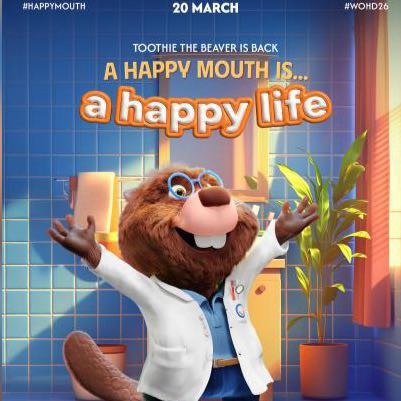
The campaign, “Smiles Without Borders” will be implemented from October 2025 to April 2026, in alignment with the global World Oral Health Day theme “A Happy Mouth is a Happy Life.” The initiative will be designed as a comprehensive, multi-sectoral intervention aimed at transforming oral health awareness, access, and behaviors across Kenya.
This campaign will move beyond traditional outreach models by adopting a community-centered and systems-based approach, integrating preventive education, curative services, cultural engagement, advocacy, and digital innovation. Activities will be implemented across multiple counties, targeting diverse populations including school children, vulnerable communities, occupational groups, and the general public. The overarching goal will be to establish oral health not only as a clinical issue but as a social, cultural, and public health priority embedded within everyday life.
Expanding Access to Oral Healthcare Services
A central pillar of the campaign will be the expansion of access to oral healthcare services, particularly among underserved and marginalized populations. To achieve this, the campaign will organize a large-scale national dental camp in Kibera, which is envisioned to be the largest dental outreach ever conducted in the country. This mega camp will bring together hundreds of oral health professionals, including dentists, dental students, hygienists, and nursing staff drawn from government institutions, the military, universities, and private practice. The camp will be structured to handle a high patient volume through multiple treatment stations offering extractions, restorations, scaling, screening, and referrals, alongside continuous oral health education.
In addition to the mega camp, the campaign will implement regular community dental camps at a minimum frequency of two per month, strategically distributed across various counties. These camps will ensure sustained service delivery throughout the campaign period, reaching populations that face barriers to accessing formal healthcare systems. Each outreach will integrate clinical services with education and preventive interventions, while also collecting data to support follow-up care and referrals.
Targeted outreach programs will also be conducted for vulnerable populations, including street families, children’s homes, and elderly care facilities. Street-connected children will receive screenings, basic treatment, and oral hygiene kits, while children in institutional care will benefit from structured check-ups and referral pathways. Elderly populations will be specifically targeted for denture care, oral screenings, and education on maintaining oral health in later life, recognizing the unique needs of geriatric populations.
School-Based Oral Health Promotion
The campaign will place strong emphasis on early intervention through an extensive school-based oral health program. This will involve large-scale engagement with schools across the country, where structured oral health education sessions will be delivered to students. These sessions will include practical demonstrations on proper brushing techniques, discussions on diet and oral health, and interactive engagements designed to instill lifelong healthy habits.
To reinforce learning and ensure long-term impact, selected schools will be revisited for follow-up programs, allowing for monitoring of behavioral change and reinforcement of key messages. The campaign will also incorporate interactive strategies such as quizzes and trivia sessions during school visits and camps, where children will be rewarded for participation and correct responses. This approach will transform learning into an engaging and memorable experience.
Recognizing the role of caregivers in shaping children’s health behaviors, the campaign will also include maternal education sessions, where mothers will be trained on infant oral care, preventive practices, and the importance of early intervention. This dual approach will ensure that both children and caregivers are empowered with knowledge and practical skills.
Community Engagement and Cultural Integration
Understanding that oral health behaviors are deeply influenced by cultural beliefs and social norms, the campaign will prioritize community engagement through culturally sensitive approaches. A series of community forums, commonly known as barazas, will be conducted across various regions of the country. These forums will provide a platform for open dialogue on oral health, allowing community members to discuss practices, beliefs, and challenges.
During these engagements, the campaign will actively address harmful cultural practices such as infant oral mutilation and culturally driven tooth extractions. Education will be delivered in local languages to ensure clarity, acceptance, and relevance. By fostering respectful dialogue rather than confrontation, the campaign will aim to promote sustainable behavior change.
To strengthen community ownership, the campaign will recruit traditional leaders, chiefs, and elders as oral health ambassadors. These individuals hold significant influence within their communities and will play a critical role in reinforcing positive oral health practices. Similarly, religious leaders will be engaged and trained to disseminate oral health messages within places of worship, thereby reaching large congregations and embedding oral health within everyday community life.
Targeted Public Health and Occupational Interventions
The campaign will address specific public health risks through targeted interventions aimed at high-risk populations. One such initiative will focus on boda boda riders, who represent a group highly susceptible to maxillofacial injuries due to road traffic accidents. Through this program, riders will receive education on injury prevention, alongside distribution of helmets and reflectors. The initiative will be amplified through a public motorcade to increase visibility and awareness.
Similarly, outreach will be conducted at construction sites, where workers face significant occupational risks related to head and neck injuries. These sessions will combine oral health education with broader safety messaging, emphasizing the importance of protective gear and preventive practices.
To ensure sustainability at the grassroots level, the campaign will also train community health promoters, equipping them with knowledge on common oral health conditions and preventive strategies. These individuals will serve as ongoing resources within their communities, extending the impact of the campaign beyond its duration.
Inclusion and Equity
Inclusivity will be a fundamental principle guiding the campaign. Special programs will be designed for persons with disabilities, ensuring that oral health education is accessible to all. Outreach will be conducted at schools for the blind and deaf, with education delivered through adapted methods, including sign language.
In collaboration with relevant organizations, the campaign will develop accessible educational materials tailored to the needs of differently-abled individuals. This will ensure that key oral health messages are not only delivered but also understood and retained.
National Awareness and Media Engagement
To achieve widespread impact, the campaign will implement a robust media and digital communication strategy. Social media platforms will be leveraged to disseminate engaging content, including educational videos, testimonials, and interactive campaigns. Influencers and public figures will be engaged to amplify messaging and reach broader audiences.
Traditional media will also play a key role, with television and radio interviews, including vernacular stations, ensuring that information reaches diverse linguistic groups across the country. Additionally, oral health messages will be integrated into everyday life through branding of public transport systems (matatus), providing continuous exposure to the public.
Creative Advocacy and Innovation
Innovation will be a defining feature of the campaign. The official oral health theme song will be translated into Swahili and multiple local languages, making it more accessible and relatable to the Kenyan population. To enhance engagement, a dance challenge will be developed around the song, encouraging community participation and social media interaction.
An additional original song promoting oral health will also be produced, using music as a powerful tool for education and behavior change. These creative approaches will ensure that oral health messaging resonates across different age groups and communities.
The campaign will further integrate technology through the development of an AI-powered oral health chatbot, designed to provide real-time responses to common oral health questions. This innovation will extend access to information beyond physical interactions, making oral health guidance available to anyone with digital access.
National Outreach Through Oral Health Safari
A unique Oral Health Safari initiative will be undertaken, involving travel across multiple regions of Kenya, including Nyanza, Central, and Rift Valley. This initiative will focus on delivering culturally tailored oral health education while strengthening national cohesion and awareness. By physically engaging diverse communities, the campaign will ensure inclusivity and representation.
Mentorship and Capacity Building
The campaign will invest in the future of oral health by conducting mentorship sessions for dental students and young professionals, emphasizing the importance of preventive dentistry and community engagement. These sessions will aim to shift focus from purely curative approaches to holistic, preventive care.
High school students will also be engaged and inspired to pursue careers in dentistry through exposure to real-life dental practice during camps and outreach activities. This will contribute to building the next generation of oral health professionals.
Advocacy and Policy Engagement
A key component of the campaign will be advocacy aimed at strengthening oral health systems. Reports generated from outreach activities will be submitted to county governments to inform policy development and integration of oral health into broader health agendas. This data-driven approach will ensure that the campaign contributes to long-term systemic change.
Sustainability and Follow-Up
To ensure lasting impact, the campaign will incorporate strong sustainability mechanisms. Follow-up dental camps will be conducted to monitor patient outcomes and provide continued care. Schools engaged during the campaign will continue to receive support through repeat visits and reinforcement programs.
Community ownership will be strengthened through the continued involvement of trained ambassadors, community health promoters, and local leaders. These structures will ensure that oral health awareness and practices are maintained long after the campaign period ends.
-1.2838184, 36.8177172
Information
AMREF GROUNDS, KIBERA
NAIROBI
00200
Kenya